







|
Signature Sponsor


By Patrick Hollis
February 4, 2022 - This month marks the 50th anniversary of an industrial strike which hit the nation’s coal mines for over six weeks.
The strike was most noticeable as it was the first time in almost 50 years that miners in Britain had gone out on strike.
Not since the 1926 General Strike had coal miners officially downed tools, and during the strike of 1972 they fought to earn a much deserved pay rise for the still dangerous and important role they played in society.
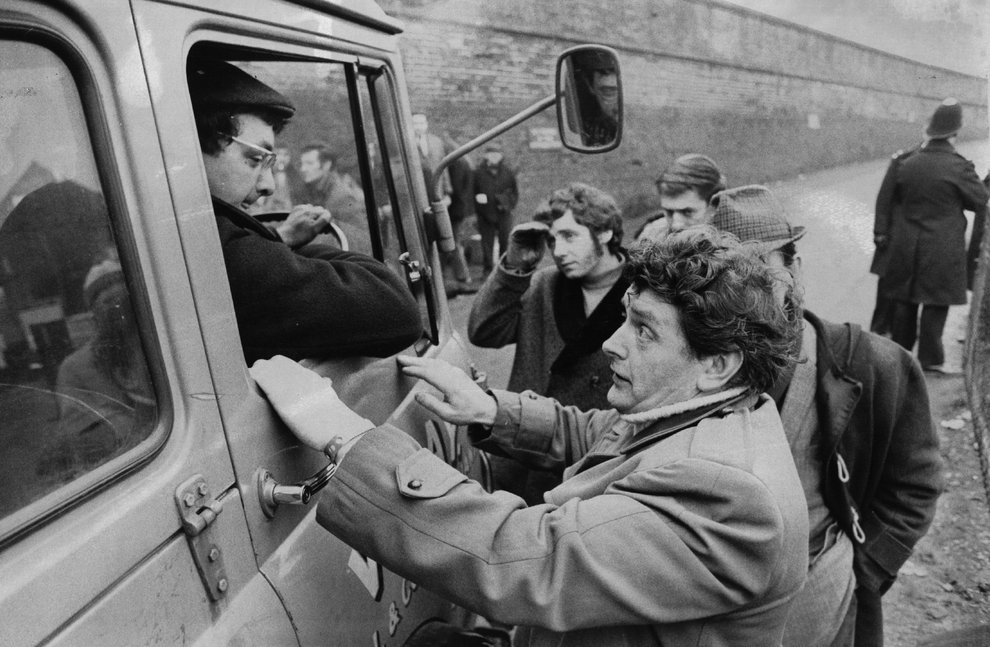
A picket from Warwickshire questions a lorry driver leaving West Drayton National Coal Board Depot at the height of the miners' strike.
Why Did Miners Strike in 1972?
The strike began due to a breakdown in pay negotiations between the National Union of Mineworkers (NUM) and the National Coal Board.
Wages of miners had, in the 1950s and 60s, been some of the highest in the country, but by the early 1970s this had declined.
In previous decades miners’ wages had been above that of their counterparts in the manufacturing industry, but in 1970 the roles had reversed and it was Britain’s miners who were worse off.
On 9 January 1972 the National Executive Committee of the NUM called the strike.
Owen Briscoe was an NUM official in Doncaster. He was interviewed by Thames TV at the start of the strike.
“The impetus for the strike has come from the rank and file,” he said. “There were two unofficial strikes in 69 and 70 that were done by the rank and file themselves. When miners vote with their feet, i.e. go out on strike, that’s it.”
Briscoe added: “The miners have shown perfect allegiance to successive governments and now, after this, they are five pounds worse off wage wise than they were in 1967 due obviously to inflation. They’ve literally been kicked in the teeth.”
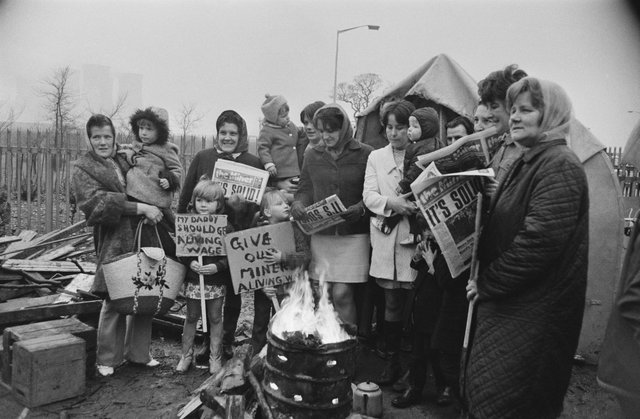
The wives and children of British miners on a picket line outside one of the two power stations at Rugeley in Staffordshire.
What Were ‘Flying Pickets’
Used widely during the 1972 strike, flying pickets were a way of transporting striking workers to other areas to stand on picket lines.
The method helped to get miners to other collieries to offer support to their fellow workers in an efficient time.
Key Events of the 1972 Strike
The Battle of Saltley Gate
For a week of the strike, attention was focused on a fuel storage depot near Birmingham.
The aim for the miners was to prevent fuel supplies from being transported around the country in an attempt to stop them reaching the locations that depended on them.
The number of pickets at the depot started small, but by 10 February had swelled to around 15,000.
Striking miners were joined in solidarity by members of other trade unions.
This significant rise in support led to the closure of the depot, a momentous moment in the strike.
It was also after the events at Saltley Gate that the improved wages offer was made to the NUM.
State of Emergency and a Three-Day Week
The impact of the strike caused a fuel shortage, meaning the Government needed to act to preserve the dwindling coal supplies.
As a response to this, a state of emergency was declared and two days later, a three-day working week was brought into place in an attempt to save fuel.
What Was the Outcome?
The strike came to a conclusion on 28 February when miners returned to work. They were successful in earning a wage increase.
Further to this, the miners showed other workforces and trade union members that it was possible to achieve wage increases, even in the 1970s.
The 1972 strike would be the first of three official walkouts over the next 15 years, as trade unions faced up to the hardened anti-trade union policies of the Conservative government.
The strike of 1972 was an overwhelming victory for the miners, who later would earn one of the highest wages in working class Britain.
Just over 12 years later, in March 1984, miners again went out on strike in what would be an action that lasted almost a full 12 months.
On that occasion, the miners would be defeated, marking the beginning of the end for UK coal mining.
|









|