







|
Signature Sponsor


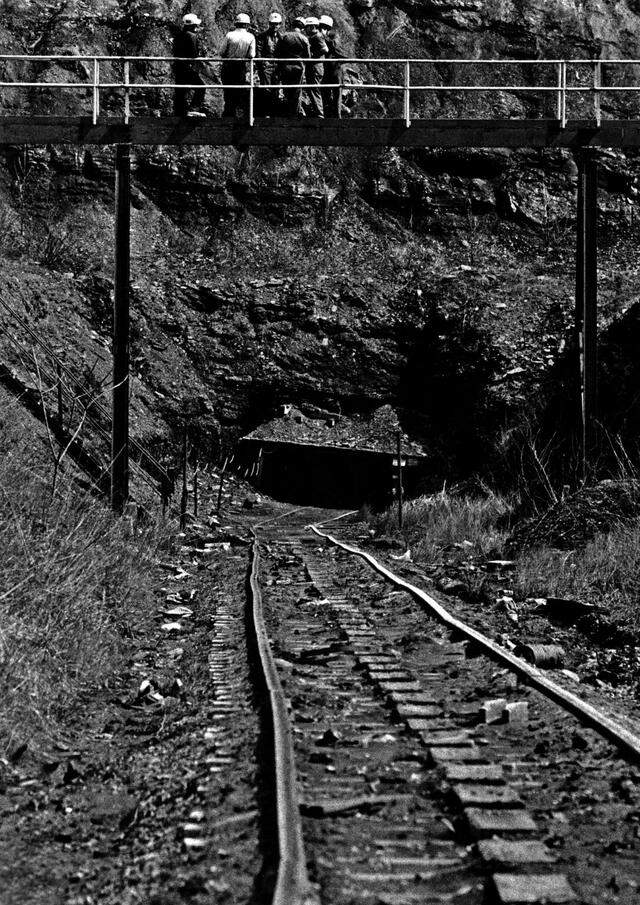
March 10, 2026 - At the base of a barren mountain, near a long-abandoned machine shop along a highway in rural Letcher County, Kentucky lies an unassuming pond shrouded in overgrowth and surrounded by metal pipes and rusted equipment. It’s here, now under several feet of water, 15 miners went underground to work for the last time in 1976 and 11 others who came to rescue them died just two days later.
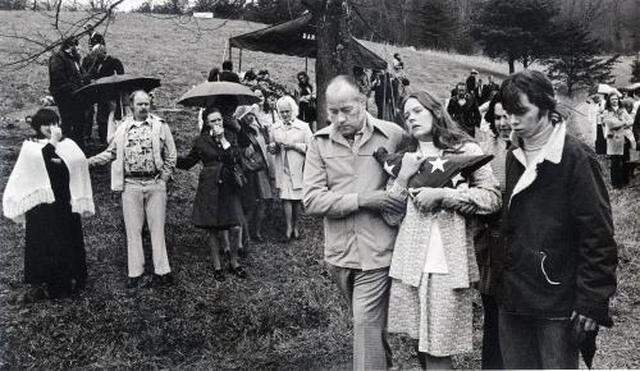
Monday marked 50 years since one of the worst coal mining disasters in U.S. history took the lives of 26 miners, rescue workers and federal inspectors at an underground site near the Oven Fork community in Eastern Kentucky. Families, ministries and researchers gathered in and around the former Scotia Coal Mining site Monday to honor the men whose deaths helped reshape the industry for good.
Poor ventilation caused the first explosion shortly after 11:30 a.m. March 9, 1976, at Mine No. 1, about 1,200 feet underneath a spur of Black Mountain, Kentucky’s highest peak. Two days later, a second blast — also caused by a buildup of methane gas — killed and trapped rescuers who were digging out the wreckage at the farthest end of a passage nearly 2.5 miles from the slope.
Although not Kentucky’s deadliest mining disaster, it is widely considered to be one of the most consequential. It convinced Congress to pass the Federal Mine Safety and Health Act of 1977, a comprehensive set of worker safety and benefits overhauls that shifted oversight to the U.S. Labor Department, ramped up underground mine inspections and restructured accident-response requirements.
Many of the lessons learned by federal regulators and first responders at the scene of the Scotia mine explosions still inform working conditions to this day. And the memories of the miners and their rescuers who died there live on for those whose family members never returned home.
“The 26 who died saved hundreds if not thousands,” said Michael Turner, 57, of Cumberland, whose father Willie Dean Turner died in the first explosion 50 years ago. “You get training now, and you have equipment that you need to survive if something, God forbid, happens like that again.”
Turner, himself a retired coal miner of 18 years, witnessed firsthand how the federal government cracked down on coal companies that were bending the rules in the wake of Scotia and began weighing in on mine disputes on the side of workers, not the companies that employed them.
He said he was forced into the mines when it came time to work on the south side of Pine Mountain in rural central Appalachia.
“It’s all that’s here,” he said. “Coal mining was just what there was.”
But the underground mines he worked were “100% different” than the Scotia mine his father died in because of the hard truths the deaths taught the industry, Turner said. Miners today have fireproof shelters, emergency rations and oxygen supplies. The coal companies can’t stay open when they fail safety inspections.
Scotia, which ultimately closed operations amid Kentucky’s declining coal sales, didn’t adequately address several warnings it received for ventilation and disabled equipment used to clear the air so it could open another mine shaft. What was then known as the U.S. Mining Enforcement and Safety Administration didn’t remove the latent gas and coal dust in the shafts fast enough after the first explosion, which triggered the second.
The widows of 15 Scotia miners sued the mine’s parent company, Blue Diamond Coal, for $60 million, claiming it was negligent. A federal judge who was later criticized for his own investments in the mining industry initially dismissed the suit, claiming workers compensation from Scotia was their only remedy. But in a landmark decision by the U.S. Circuit Court of Appeals for the Sixth Circuit, a panel of judges remanded the case back to the district court, ruling the parent company couldn’t shield itself from liability by hiding behind its subsidiary.
The size and scope of the two blasts sent shockwaves not only through the miles of underground passageways under Eastern Kentucky but across the nation, as regulators and nascent mine rescue operators began to better understand how poorly ventilated air moved and could become trapped underground.
“I’ve talked to a lot of these mine rescue guys, and they all say basically the same thing,” said Brian McKnight, founding director of the Center for Appalachian Studies at the University of Virginia’s College at Wise. “They say, ‘When we got called for the first explosion, we were excited; we were ready. When we got called for the second explosion, we were terrified.’”
Honoring the mine rescue teams
Monday, McKnight helped honor several of the mine rescue teams from other Pine Mountain coal companies that came to the rescue 50 years ago by bestowing on them Kentucky Colonel certificates signed by Gov. Andy Beshear.
Matt “Pug” Smith, 74, was just 23 years old when he and his fellow Virginia-based Westmoreland mine rescue teammates responded to the Scotia disaster. He went down the shaft to help restore ventilation after the first explosion.
Both explosions left the mine coated in a thin layer of black dust and filled the air with a haze that made it hard to distinguish anything, Smith said. The duo of blasts shot through the shafts like a shotgun, stealing away the air and trapping pockets of gas in narrow passageways and cavities in the walls.
“It is jet black,” Smith said. “There is a coat of soot over everything. You can’t see anything. You can’t see bodies. It’s black as night.”
John Hackworth was 2,000 feet from the first blast and turned to run toward the site of six trapped miners when he encountered a pocket of “bad air” he couldn’t pass through. Just feet away, those survivors were trapped by the same unbreathable air and were forced to retreat and ultimately suffocated.
Hackworth returned to man the water stations for rescue teams underground, and Smith said he grew close to him working underground those two days. Hackworth died when the second blast ripped through narrow shafts.
J.R. Kimberlin, 75, a mine rescue team leader, said the images of fellow miners sent to rescue others dead deep underground have stuck with him to this day.
“It was not good,” he said, sitting just a few miles from where he and others were dropped down a borehole in a bucket to search for bodies. ”When you step into the explosion area, you can just see ... it’s bad. I’ve thought a lot about this. But 50 years later, you’re right back there.”
The disaster tore at families and left tight-knit communities hemmed in by the high Appalachian ridges near the Virginia border reeling for years. It changed people who lived there forever and became engrained in the identities of those who grew up there, said Loran Sturgill, 50, who was raised in a home next to the Scotia mine.
“Nobody was the same after that,” she said. “How could they be?”
After the second explosion, Scotia and MESA closed the mines out of an abundance of caution, which didn’t sit right with the nearby residents who were forced to hold funerals with empty caskets. Just a few years earlier, in Farmington, W.Va., 19 bodies were never recovered after a blast killed 78 miners.
“They’re terrified that they’re never going to get closure,” McKnight said. “A lot of these families, thought, ‘Oh my God, we’re never going to get them back.’”
Community members protested outside mine No. 1’s entrance for more than 200 days before MESA finally reopened the mine and recovered the bodies.
Ronald Kiser, 65, of Nortan, Va., was just a teenager at the time, but he held signs with his family across the street from the mine entrance. When the shaft reopened, he stood on a catwalk above the entrance the day a coal cart slowly wheeled bodies from deep underground and carted them to a temporary morgue set up nearby. His uncle, Kenneth Kiser, was a federal mine safety inspector whose body was among those removed.
Fifty years later, he looked out over the pond covering the mine entrance once more as his two grandchildren peered into the shallow water.
“There’s been a lot of people’s lives been saved because of what happened that day,” Kiser said. “The mining laws have changed drastically.”
|









|