









|
Signature Sponsor


April 15, 2026 - In the first half of April, the Asian coking coal market continued to react to the conflict in the Middle East. In China, prices are under pressure from increased production at local mines, while in India, they are being weighed down by high buyer inventories.
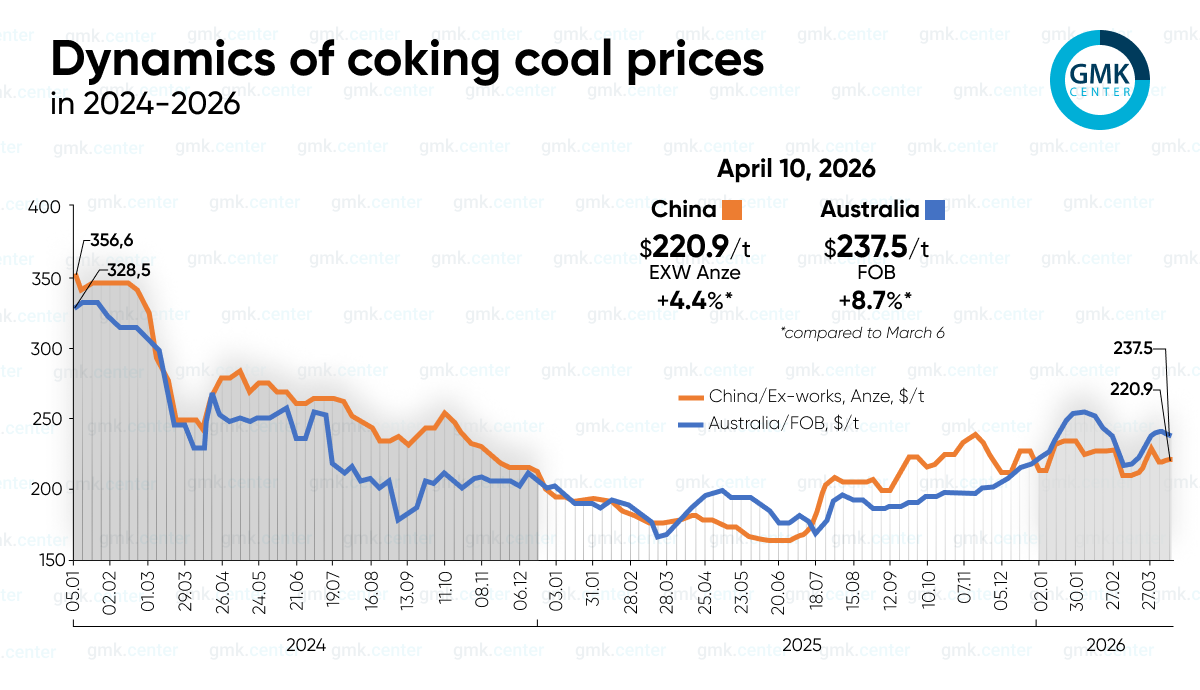
According to Kallanish, the price of high-quality coking coal FOB Australia as of April 10, 2026, stood at $237.47/t, down 1.2% from the previous week (April 3).
Spot prices for coking coal in China (EXW, Anze) on the same date stood at $220.93/t, rising slightly from the previous week.
Overall for the month (since March 6), the price of coking coal FOB Australia rose by 8.7%, and EXW, Anze by 4.4%.
The increase in production and stockpiles at Chinese mines during the first ten days of the month has weakened the domestic coking coal market in China, as rising supply has not been matched by a corresponding trend in demand. According to a national survey by Mysteel, coking coal production at the 523 enterprises that participated in the survey averaged 2.03 million tons per day from April 2 to 8. The previous week saw a 15-month high of 2.04 million tons per day. Supplies of this raw material from Mongolia also remain at high levels.
However, starting April 13, the Chinese coking coal market began to show signs of recovery after a two-week decline, primarily due to deals involving cheaper grades.
Prices for Australian seaborne coking coal rose in early April due to buyers restocking their inventories. Sentiment in this market was mixed due to varying forecasts regarding the conflict in the Middle East and, consequently, trends in energy resources, raw materials, freight rates, and so on.
As of April 10, prices for seaborne coking coal had fallen slightly. Buyers, like traders, remain cautious amid uncertainty regarding developments in the war with Iran.
The Indian coking coal market showed a downward trend in prices and further softening at the end of last week. Specifically, according to BigMint, imports of this raw material into the country rose significantly in March—to 6.5 million tons, up from 4.4 million in February. In addition, monthly volumes exceeded the usual average of 5.0–5.5 million tons. Consequently, Indian buyers have sufficient stockpiles and are not actively pursuing new orders. They are also waiting to see how freight rates will develop and how this will affect cargo costs.
As a reminder, in the second half of March, the coking coal market reacted to rising freight rates due to the conflict in the Middle East, causing prices for this raw material to rise; however, demand did not support this trend. |










|